A band tour bus moves the crew, the gear, and the schedule in one vehicle. This guide covers sleeper coaches vs motorcoaches, routing, bunks, and what to book for a multi-day tour.
Why a Sleeper Coach Is the Touring Standard
A band tour is a logistics problem first and a music problem second. The vehicle that moves the artist, the crew, and the gear between cities decides whether the tour runs on schedule or unravels into missed soundchecks and exhausted performances. A sleeper coach solves that problem by turning travel time into rest time.
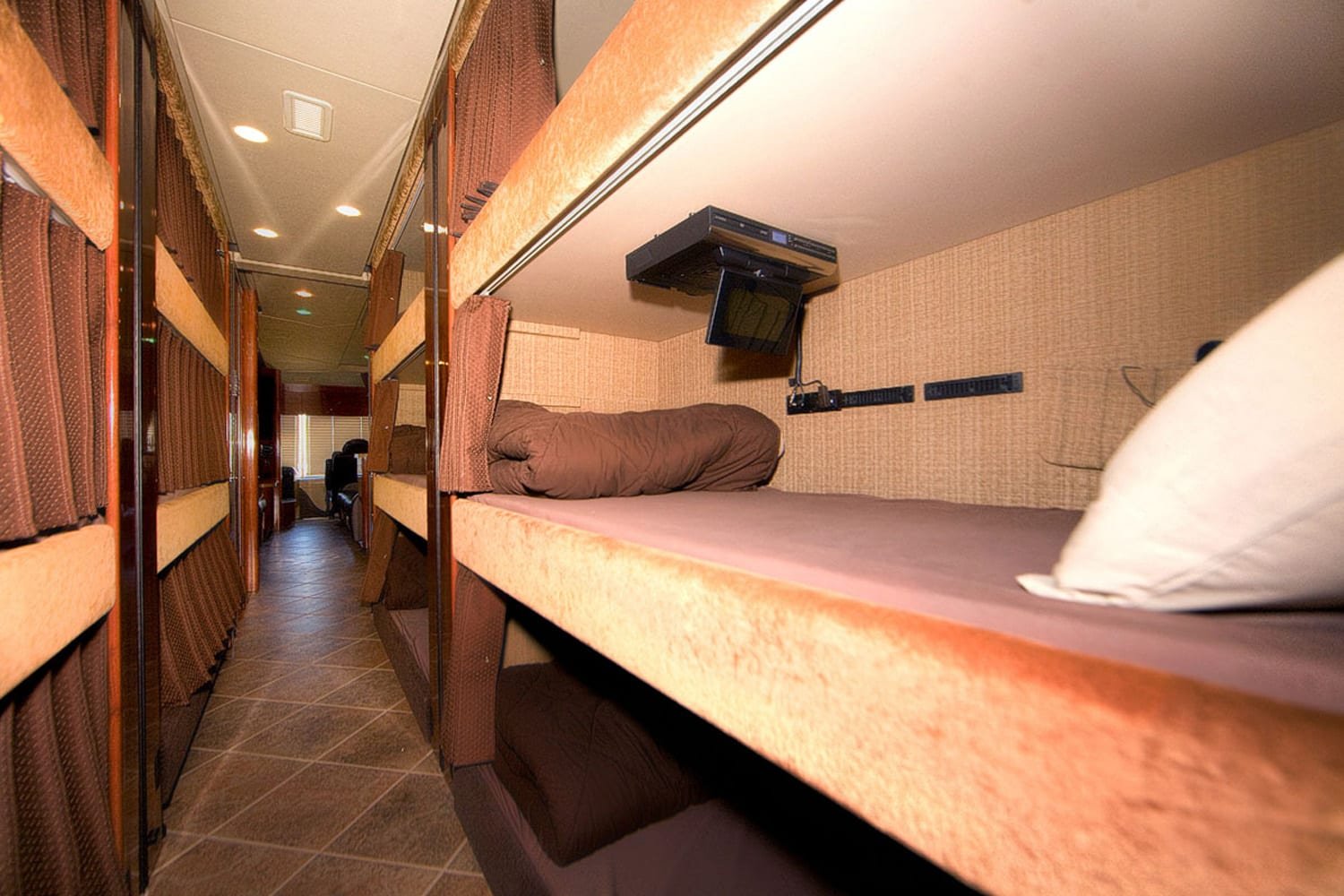
A sleeper coach sleeps 12 to 14 passengers in private bunks at night and seats the same group in the lounge by day. The bus moves while the group sleeps, which is how a 14-city run gets done without 14 hotel blocks and 14 checkout deadlines. For tours where the nightly hotel cost would exceed the daily bus cost, the sleeper coach is the clear choice.
Sleeper Coach vs Motorcoach for a Tour
The choice between a sleeper coach and a standard motorcoach comes down to itinerary length and overnight routing.
- Sleeper coach (12 to 14 with bunks): The right pick for multi-day tours with overnight drives between cities. Private bunks, a lounge, a kitchenette, and gear storage let the group sleep while the bus moves.
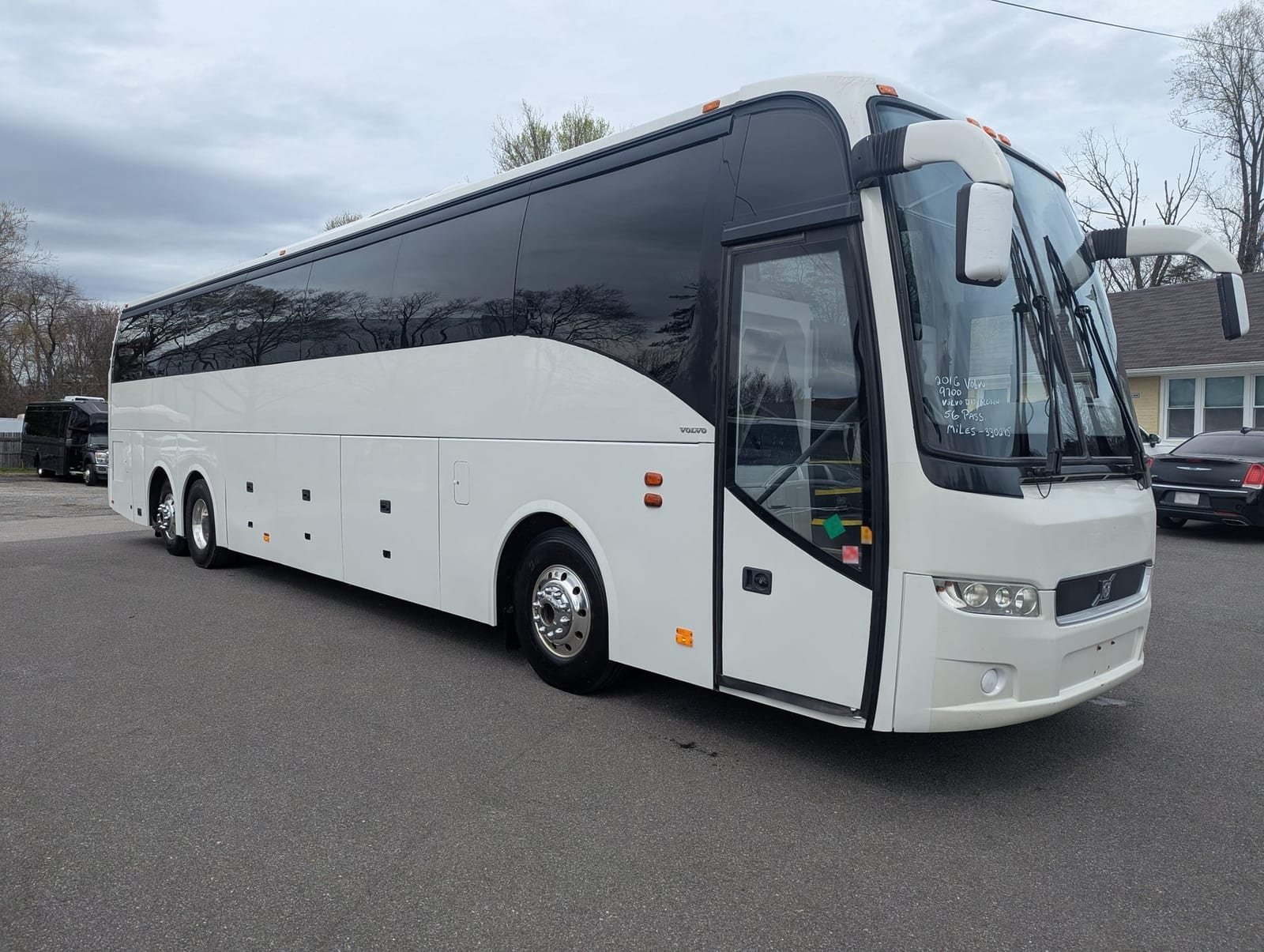
- Motorcoach (47 to 56 passengers): The right pick for a large crew traveling during the day between nearby cities. Reclining seats, WiFi, and an onboard restroom, but no bunks — the group still needs hotel rooms every night.
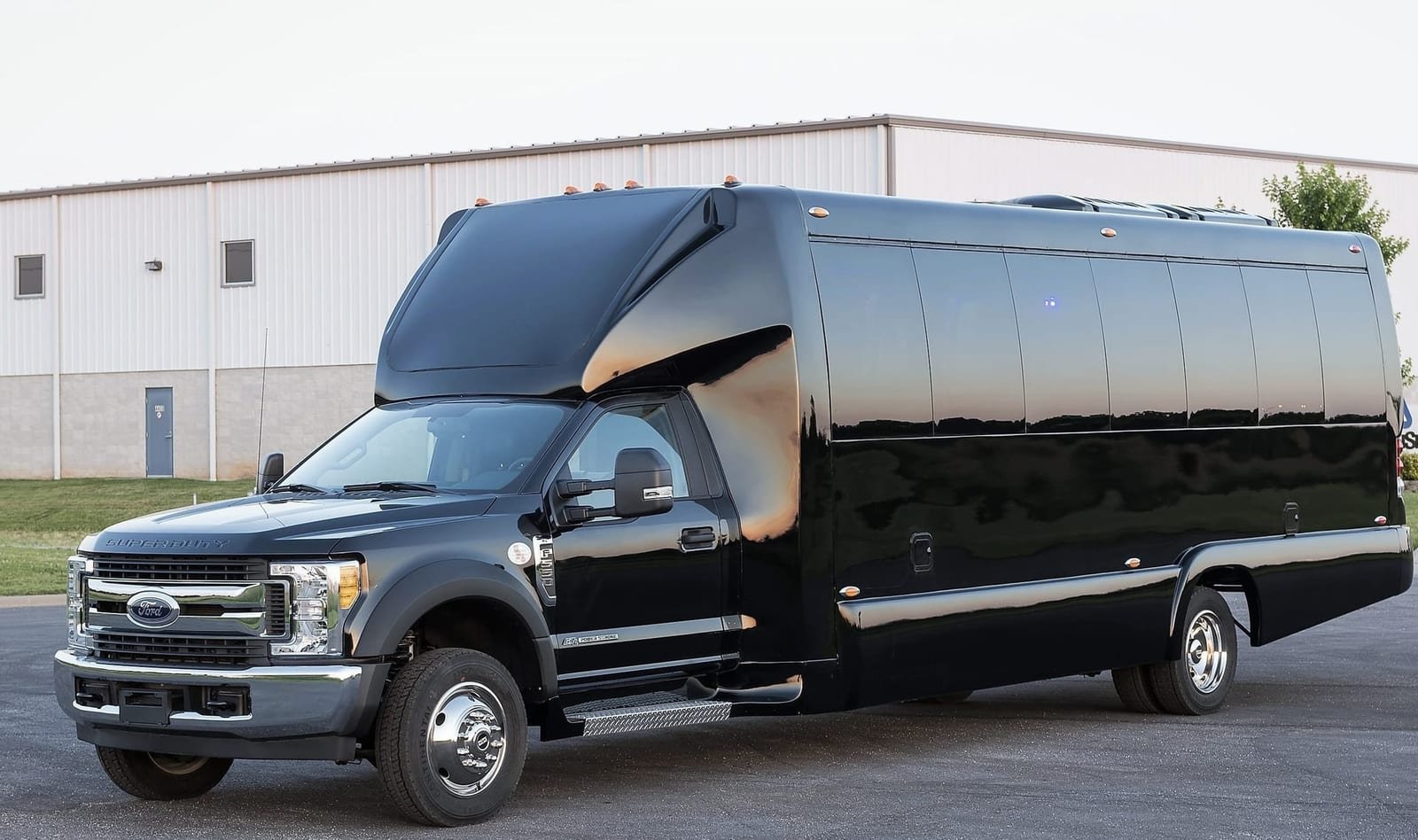
- Sprinter van (12 to 15 passengers): The right pick for a small act or management team on a short regional run with no overnight travel.
- Combination: For a large production, run a sleeper coach for the talent and a separate motorcoach or box truck for the crew and gear.
Routing a Multi-Date Tour
Tour routing is where most charters either save money or waste it. The goal is to minimize deadhead miles — the distance the bus travels empty between a drop-off and the next pickup. A loop routing that hits cities in geographic order costs less than a back-and-forth schedule that crosses the same state three times.
Build the route as a loop with a clear start and end city, then hand the full itinerary to the charter company at once. RoadNation routes multi-date tours with one driver team across the full run where legal, which keeps the driver familiar with the load-in at each venue and keeps the group from absorbing a new-driver orientation at every stop.
For runs that push past a single driver's legal hours-of-service limit, plan a second driver or a scheduled overnight rest. Federal rules are strict on this, and a tired driver is a safety and liability risk no tour should accept.
Bunks, Gear Storage, and the Tour Rider
A sleeper coach works only if the bunks, the lounge, and the gear storage match the tour's needs. Confirm the bunk count and layout when you book. Most sleeper coaches mix single bunks with a few double bunks for management or couples. The lounge doubles as a daytime meeting space and a meal area.
Gear storage is the variable that catches tours off-guard. A full backline, merch totes, and personal instruments do not always fit in a standard bay. Share the gear list with the charter company at the quote stage so the right vehicle — or a separate gear vehicle — is matched. Trying to fit a sold-run's worth of gear into a bus that was booked for passengers only is how soundcheck gets delayed by two hours.
The tour rider covers what the bus needs at each stop: a parking area that fits a 45-foot coach, a power hookup if the bus runs a 110V shore line, and a loading window that lines up with the venue's load-in schedule. Confirm these with each promoter in advance.
When to Book a Band Tour Bus
Book a band tour bus 8 to 12 weeks before the first date for a domestic multi-city run, and earlier for a tour that crosses peak summer or festival season. The sleeper coach pool is small in every market, and the vehicles that are clean, well-maintained, and driven by experienced touring drivers go first.
When you book, share the full route, the passenger count (talent plus crew), the gear list, and any special requests (a trailer hitch, a shower, a specific lounge layout). RoadNation returns an all-inclusive day-rate quote within 2 hours that covers the driver, fuel, insurance, mileage, and standard amenities, so the invoice matches the plan the tour accountant approved.
Ready to Book?
Get an all-inclusive charter bus quote within 2 hours. Share your route, dates, and group size and our team will match you to the right vehicle.
Frequently Asked Questions
A sleeper coach is the standard for multi-day band and crew tours because it keeps everyone on the bus overnight and arrives rested. For single-day regional runs or smaller acts, a motorcoach or minibus may be enough. The all-inclusive quote covers the driver, fuel, insurance, mileage, and standard amenities. Share your full route for an exact quote.
Most sleeper coaches sleep 12 to 14 passengers in private bunks and seat the same group in the lounge during the day. Bunks are usually a mix of singles and doubles. For a larger production, run a sleeper coach for the talent and a separate motorcoach for the crew and gear.
Many sleeper coaches can be equipped with a trailer hitch, but it has to be specified at booking. Confirm the trailer weight, the hitch class, and any state towing restrictions along the route. If the gear list exceeds what the bus can safely tow, a separate gear vehicle or box truck is the safer call.
For most multi-date tours, a single driver team stays with the bus across the full run where legal. Federal hours-of-service rules cap how long a driver can be behind the wheel, so runs that push past the limit require a second driver or a scheduled overnight rest. RoadNation plans the driver schedule with the route so there are no surprises mid-tour.
Maria G.
Nine years on the RoadNation dispatch floor — school runs, sports charters, and wedding weekends. I build the routes, answer the 24/7 line on trip days, and write these guides the way I would explain them to a group leader on the phone.